Who is most at risk of Legionnaires’ disease?
Older people, smokers, and anyone with an underlying health condition or weakened immune system: who is most vulnerable, and what that means for duty holders.
Read the guideGuidance
Warm water, stagnation, biofilm and poor system design: the conditions legionella needs to multiply, and how they're controlled.

Ryan Tansley M.W.M.Soc
Legionella bacteria occur naturally in rivers, lakes, reservoirs, and other freshwater environments. In these natural settings, the bacteria are usually present in low numbers and rarely pose a significant risk to human health. Problems arise when Legionella enters man-made water systems where conditions allow it to multiply.
Understanding how Legionella bacteria grow is essential for anyone responsible for a water system. By recognising the conditions that encourage bacterial growth, duty holders can take practical steps to minimise risk and comply with their legal obligations.
Legionella bacteria require several factors to be present before significant growth can occur. While eliminating every single factor is often impractical, effective water management focuses on controlling these conditions to prevent bacterial multiplication.
Temperature is one of the most important factors influencing Legionella growth.
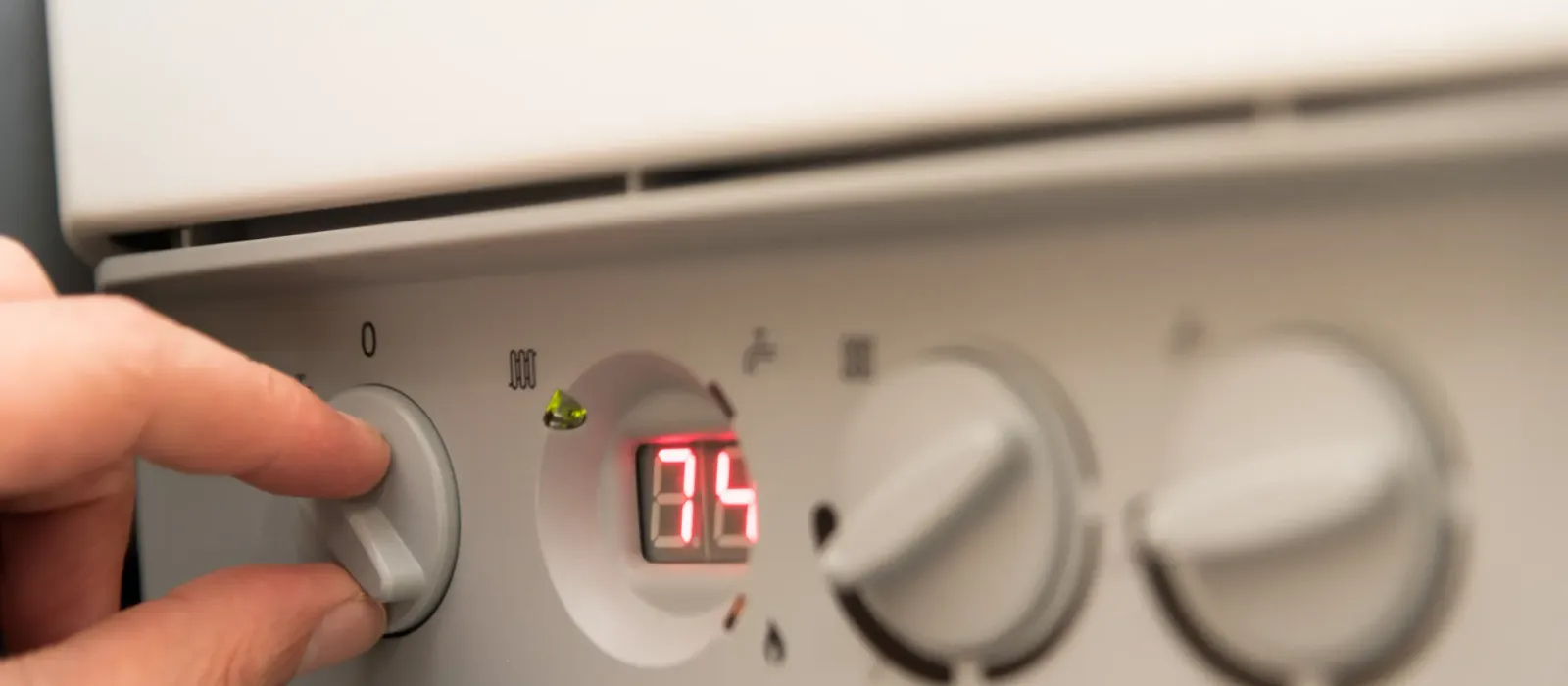
The bacteria thrive in water temperatures between approximately 20°C and 45°C, with growth occurring most rapidly within this range. Water temperatures below 20°C significantly reduce bacterial activity, while temperatures above 50°C begin to inhibit growth. At sufficiently high temperatures, Legionella bacteria are destroyed.
For this reason, temperature control remains one of the primary methods of controlling Legionella in hot and cold water systems.
Standing or stagnant water creates ideal conditions for bacterial growth.
When water is left unused for prolonged periods, disinfectant levels may reduce, temperatures can drift into the Legionella growth range, and sediment may settle within pipework and fittings. Examples include:
Regular use and routine flushing of infrequently used outlets are important measures for reducing stagnation.
Biofilm is a slimy layer of microorganisms that can develop on the internal surfaces of pipes, tanks, valves, and fittings.
Legionella bacteria can survive and multiply within biofilms, where they are provided with nutrients and protection from external influences. Once established, biofilm can be difficult to remove and may allow bacteria to persist even where other control measures are in place.
Good system design, regular maintenance, and appropriate cleaning help minimise biofilm development.
Like all living organisms, Legionella requires nutrients to survive and reproduce.
Sediment, scale, rust, sludge, and organic debris can provide a food source for microorganisms within a water system. Accumulations of debris can occur in storage tanks, dead legs, low-flow areas, and poorly maintained pipework.
Keeping water systems clean and free from unnecessary contamination helps reduce the availability of nutrients that support bacterial growth.
Limescale and corrosion are common issues within water systems and can contribute to Legionella risks.
Rough surfaces created by corrosion provide areas where biofilm can attach and develop. Scale deposits can also trap nutrients and shelter microorganisms from normal water flow.
Regular inspection and maintenance can help identify and address these issues before they become significant problems.
A “dead leg” is a section of pipework where water can become trapped and remain stagnant.
Where water is not regularly circulated, the conditions become increasingly favourable for bacterial growth. Poorly designed systems, unnecessary pipe runs, oversized storage tanks, and redundant services can all increase the risk.
One of the objectives of a Legionella Risk Assessment is to identify design issues that could encourage bacterial growth and recommend proportionate improvements where necessary.
Not all buildings present the same level of risk.
A modern, well-maintained office building with regular water usage may present a relatively low risk. In contrast, buildings with intermittent occupancy, ageing water systems, poor temperature control, or little-used outlets may require more extensive management and monitoring.
The overall risk depends on both the condition of the water system and the likelihood of people being exposed to contaminated water droplets.
The good news is that Legionella growth can usually be prevented through straightforward water hygiene measures.
Common control measures include:
These measures form part of the wider approach to Legionella control recommended by the Health and Safety Executive (HSE).
Under the Health and Safety at Work etc. Act 1974, the Control of Substances Hazardous to Health (COSHH) Regulations, and the HSE’s Approved Code of Practice (ACOP) L8, duty holders are required to assess and manage the risk of exposure to Legionella bacteria where a reasonably foreseeable risk exists.
Understanding how Legionella bacteria grow is the first step in identifying potential hazards and implementing suitable control measures to keep building occupants safe.
Health and Safety at Work etc. Act 1974
Control of Substances Hazardous to Health (COSHH) Regulations
Management of Health and Safety at Work Regulations
HSE ACOP L8: Legionnaires’ Disease: The Control of Legionella Bacteria in Water Systems
HSE HSG274: Legionnaires’ Disease: Technical Guidance
Further reading: HSE guidance on legionella and Legionnaires’ disease.
How legionella grows
Legionella occurs naturally in rivers and lakes in tiny numbers. The problems start in buildings, where warm, still water gives it the chance to multiply.
Below 20°C
Largely dormant
Cold water keeps legionella inactive. Keeping cold water cold is a key control.
20°C to 45°C
The growth zone
Legionella multiplies fastest here, especially in stagnant water, scale and biofilm.
50°C and above
Growth inhibited
Hot water stored and circulated hot enough stops the bacteria multiplying.
60°C and above
Bacteria killed
Which is why your calorifier and stored hot water temperatures matter.
If you're an employer, a landlord or in control of a premises, yes. The Health and Safety at Work Act, COSHH and the HSE's ACOP L8 all require you to assess and control the risk.
Older people, smokers, and anyone with an underlying health condition or weakened immune system: who is most vulnerable, and what that means for duty holders.
Read the guide
From aerosols to written schemes of control: the technical terms you'll find in a legionella risk assessment, explained.
Read the guideTell us about your property and we'll come back with a clear, competitive quote.