What causes legionella bacteria to grow in water systems?
Warm water, stagnation, biofilm and poor system design: the conditions legionella needs to multiply, and how they're controlled.
Read the guideGuidance
From aerosols to written schemes of control: the technical terms you'll find in a legionella risk assessment, explained.

Ryan Tansley M.W.M.Soc
Legionella reports are full of technical terms. Here’s what the most common ones mean, in plain English.
Aerosol
Fine airborne droplets or particles suspended in air. In Legionella control, aerosols may carry bacteria which can be inhaled into the lungs, thereby leading to infection of Legionnaires’ Disease.
Algae
Simple aquatic organisms that require light to grow and may develop in water systems exposed to daylight.
Backflow
The reverse movement of water within a system, creating the potential for contamination of the wholesome water supply.
Bacteria
Microscopic single-celled organisms that occur naturally in water, soil and other environments.
Bib Tap
A tap fitted with a threaded outlet to allow connection of a hose or similar attachment, commonly found outdoors.
Biocide
A chemical agent used to kill or control microorganisms, such as bacteria.
Biofilm
A layer of microorganisms attached to a surface and enclosed within a protective matrix, often providing favourable conditions for bacterial growth. Can appear as a greasy or oily-looking film on the surface of stagnant water.
Break Tank
An unpressurised storage tank incorporating an air gap to separate the incoming mains supply from downstream systems and prevent backflow.
Calorifier
An indirectly heated vessel used to generate and store hot water.
Chlorine
A disinfectant commonly used in water treatment to control microbiological contamination.
Cold Water Services (CWS)
The equipment, storage vessels, pipework and fittings used to distribute cold water throughout a building.
Cold Water Storage Tank (CWST)
A tank used for storing cold water prior to distribution around a property.
Combination Boiler (COMBI)
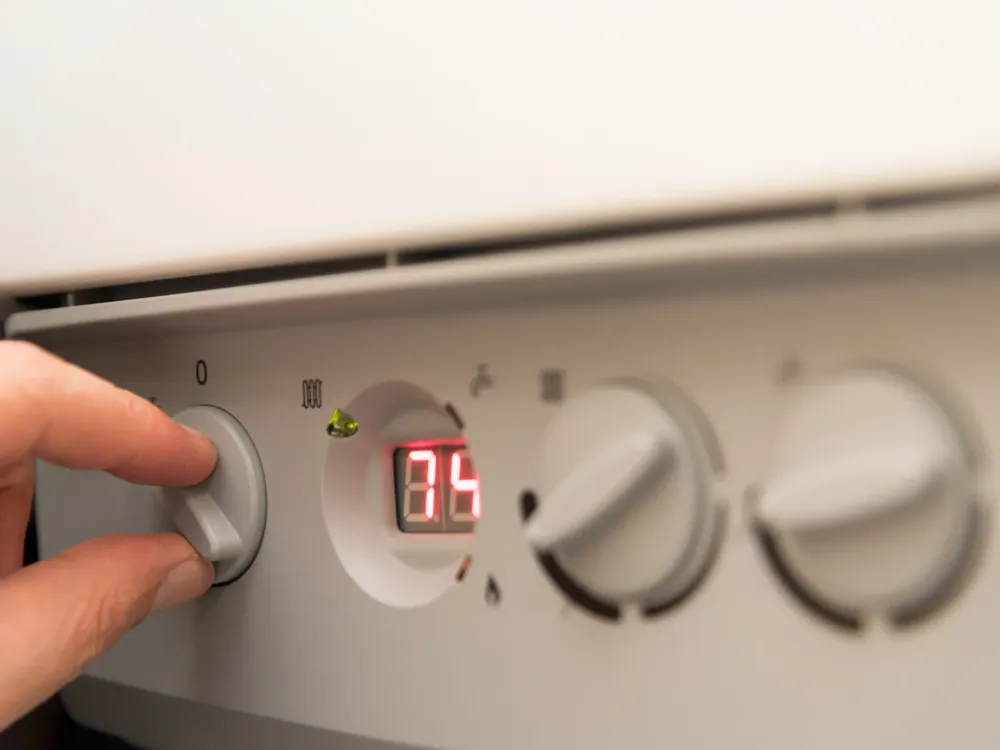
A boiler that supplies both central heating and instantaneous domestic hot water without requiring a separate hot water storage cylinder.
Combination Water Heater (CWH)
A water heater that incorporates both cold & hot water storage within a single unit, with the cold water storage located in a small tank at the top of the unit and the hot water storage below.
Contact Time
The period during which a chemical treatment remains in contact with water or system surfaces.
Corrosion Inhibitor
A chemical additive used to reduce the rate of corrosion within metallic water systems.
Dead End
A permanently capped section of pipework through which water cannot circulate. They are a high potential risk for bacterial growth as they cause stagnation of the water trapped within, with even short/small dead ends with minimal water trapped being a very high potential risk.
Deadleg
A length of pipework with little or no regular flow that may encourage water stagnation. This stagnation creates a high risk of bacterial growth, with even short/small dead legs with minimal water trapped being a very high potential risk.
Destratification Pump (Shunt Pump)
A circulation pump used on hot water cylinders to minimise temperature layering and improve heat distribution.
Disinfection
The process of reducing microbial contamination using heat, chemicals or other treatment methods.
Domestic Water
Water intended for drinking, food preparation, cooking, washing and other everyday domestic uses.
Emergency Shower
A safety device designed to rapidly drench an individual following exposure to hazardous substances.
Expansion Vessel
A pressure vessel installed within a closed water system to accommodate changes in water volume during heating and cooling.
Fluid Category 5 Cold Water Storage Tank (CAT5 CWST)
A storage tank containing water that could present a significant health hazard if it contaminated the drinking water supply. Such tanks are commonly found in healthcare, laboratory, industrial, waste-water, agricultural and similar high-risk applications. Special backflow protection is required to prevent contamination of the wholesome water system.
Fluid Category
A classification system defined by the Water Supply (Water Fittings) Regulations that ranks water quality and contamination risk from Category 1 to Category 5.
Feed and Expansion (F&E) Tank
A tank used within open-vented heating systems to maintain water levels and accommodate thermal expansion.
Flexible Hose (Flexi Hose)
A flexible pipe connector typically used between fixed pipework and appliances or outlets. The internal linings can potentially provide an ideal environment to harbour bacteria. Flexi Hose is therefore required to be WRAS approved and in good condition, with no kinks, damage or rust present.
Fouling
The accumulation of deposits, scale or biological material on surfaces that can reduce system performance.
Hot Water Services (HWS)
The equipment, pipework and outlets used to heat, circulate and deliver hot water throughout a property.
Instantaneous Water Heater (IWH)
A heater that raises water temperature on demand without storing heated water.
Legionnaires’ Disease
A potentially serious form of pneumonia caused by exposure to Legionella bacteria.
Legionella
A genus of waterborne bacteria capable of causing Legionnaires’ disease and related illnesses.
Legionellosis
The collective term for illnesses resulting from exposure to Legionella bacteria, including Legionnaires’ disease and Pontiac Fever.
mg/l (Milligrams per Litre)
A unit used to express the concentration of dissolved substances in water, equivalent to parts per million (ppm).
Microorganism
Any microscopic living organism, including bacteria, fungi and viruses.
Nutrient
Any substance that supports the growth and reproduction of microorganisms.
Pasteurisation
A heat treatment process used to reduce or eliminate microbial contamination.
Planktonic
Refers to microorganisms freely suspended within water rather than attached to surfaces.
Proliferation
The multiplication and growth of microorganisms under favourable environmental conditions.
Point of Use Water Heater (POU)
A small-capacity water heater installed close to a single outlet to provide local hot water.
Pot Wash Spray
A flexible spray assembly commonly used in commercial kitchens to rinse cookware and utensils.
PPM (Parts Per Million)
A measurement used to express the concentration of dissolved substances in water.
Filling Loop (Quick Fill Loop)
A temporary connection used to add water to sealed heating systems and restore operating pressure.
Rainwater Harvesting System
A system that collects, stores and reuses rainwater for non-potable applications.
Legionella Risk Assessment (LRA)
A systematic evaluation of water systems to identify Legionella risks and determine appropriate control measures.
RPZ Valve (Reduced Pressure Zone Valve)
A specialist backflow prevention device used to protect the public water supply from contamination.
Sacrificial Anode
A metal component designed to corrode preferentially to protect another metal surface from corrosion.
Scale
Hard mineral deposits, commonly containing calcium and magnesium, which accumulate on system surfaces. Often found on outlets, aerators, showerheads, pot wash sprays, filters (including those associated with TMVs/TMTs) and within water heaters.
Scale Inhibitor
A chemical treatment used to limit the formation and accumulation of scale deposits.
Sentinel Outlet
A representative outlet selected for routine temperature monitoring and verification of system performance, normally located at the nearest and furthest part of the system from the asset feeding it.
Serogroup
A subdivision of a bacterial species based on distinct surface antigens.
Sessile
Refers to microorganisms attached to a surface, typically as part of a biofilm.
Slime
A soft, mucus-like deposit produced by certain microorganisms.
Sludge
Soft sediment consisting of corrosion products, organic matter and debris which accumulates within water systems.
Sparge Pipe
An internal pipe arrangement within a CWST, designed to improve water circulation and turnover. Used commonly on CWSTs where the Inlet & Outlet are on the same side of the CWST.
Stagnation
A condition where water remains stationary for prolonged periods, greatly increasing the risk of bacterial growth & proliferation.
Strainer
A coarse filtration device used to prevent debris from entering and damaging equipment.
Thermal Disinfection
The application of elevated temperatures to control or eliminate microbial contamination within a water system.
Thermostatic Mixer Tap (TMT)
A tap incorporating an integral thermostatic valve that maintains a pre-set outlet temperature.
Thermostatic Mixing Valve (TMV)
A valve that automatically blends hot and cold water to achieve and maintain a safe outlet temperature.
Total Viable Count (TVC)
A measure of the total number of culturable microorganisms present within a water sample.
Wholesome Water
Water suitable for drinking, food preparation, washing and other domestic purposes.
WRAS
The Water Regulations Approval Scheme, an independent body that assesses products for compliance with UK water fitting regulations.
Written Scheme of Control
A documented management system outlining the measures, responsibilities and monitoring arrangements required to control Legionella risks.
Warm water, stagnation, biofilm and poor system design: the conditions legionella needs to multiply, and how they're controlled.
Read the guide
Older people, smokers, and anyone with an underlying health condition or weakened immune system: who is most vulnerable, and what that means for duty holders.
Read the guideTell us about your property and we'll come back with a clear, competitive quote.